FIELDWORK / LIJU — PLANTS, PEOPLE & JUSTICE ATLAS

SIX ARGUMENTS
FROM THE FIELD

The Atlas turns field evidence into six connected arguments. The first two trace environmental pressure from household livelihood to a specific ecological conflict; the next two examine how conservation redistributes value and authority; the final two ask who can afford conservation labor and who has power over its future.

The six maps

WHAT THE LANDSCAPE MAKES VISIBLE

Each map combines household testimony, field observation, and ecological context. They are visual arguments — drawn, not decorative.

Arguments 01–02

WHY DO ENVIRONMENTAL PROBLEMS HAPPEN?

Environmental pressure in Liju is produced through relationships among livelihood insecurity, markets, labor, migration, tourism, conservation, and ecological change. The first two maps trace that chain from household livelihood to a concrete ecological conflict.

Arguments 03–04

HOW DOES CONSERVATION REDISTRIBUTE VALUE AND AUTHORITY?

Biodiversity creates visibility and economic value. The middle maps ask who captures that value, and which forms of knowledge are given authority over the mountain.

Arguments 05–06

WHO CAN AFFORD TO CARE, AND WHO GETS TO DECIDE?

The final maps examine the everyday time required for conservation work, and how decision-making power is distributed among households, guides, conservation organizations, science, government, visitors, and future generations.

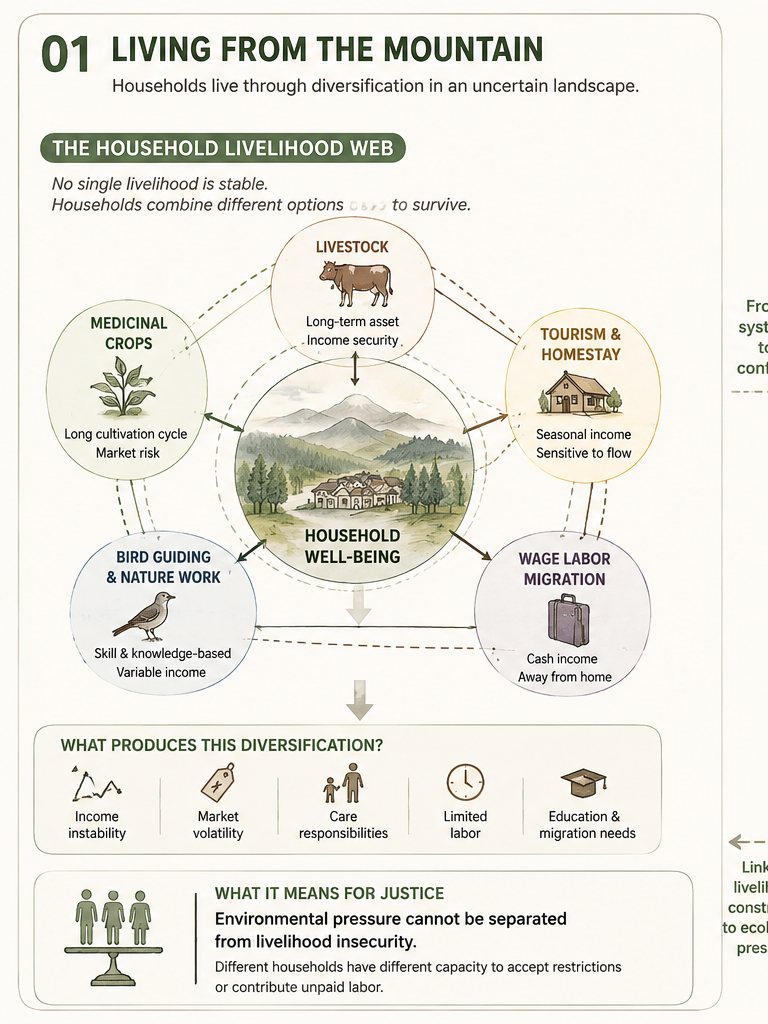
Map 01 — Living from the mountain
Map 01 — Households

LIVING FROM THE MOUNTAIN

No single livelihood is stable. Households combine livestock, tourism and homestay, wage labor migration, bird guiding and nature work, and medicinal crops to survive an uncertain landscape.

What it means for justice — environmental pressure cannot be separated from livelihood insecurity.
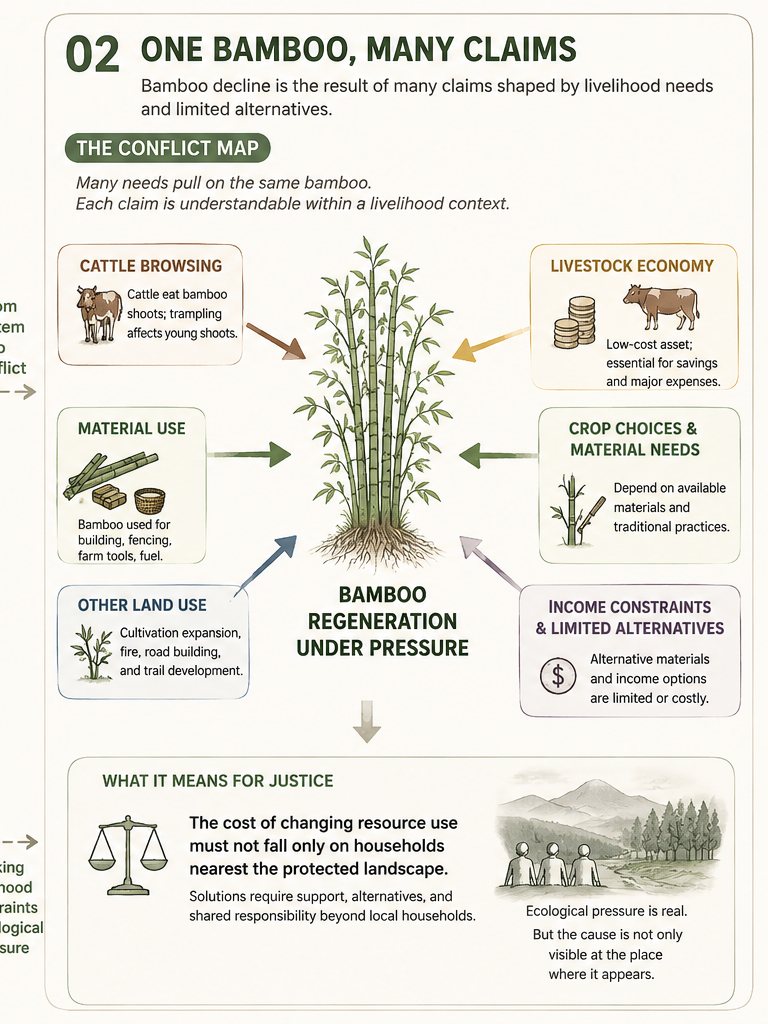
Map 02 — One Bamboo, Many Claims
Map 02 — Conflict

ONE BAMBOO, MANY CLAIMS

Bamboo decline is the result of many claims shaped by livelihood needs and limited alternatives: cattle browsing, material use, and other land use press on regeneration at once.

What it means for justice — the cost of changing resource use must not fall only on households nearest the protected landscape.

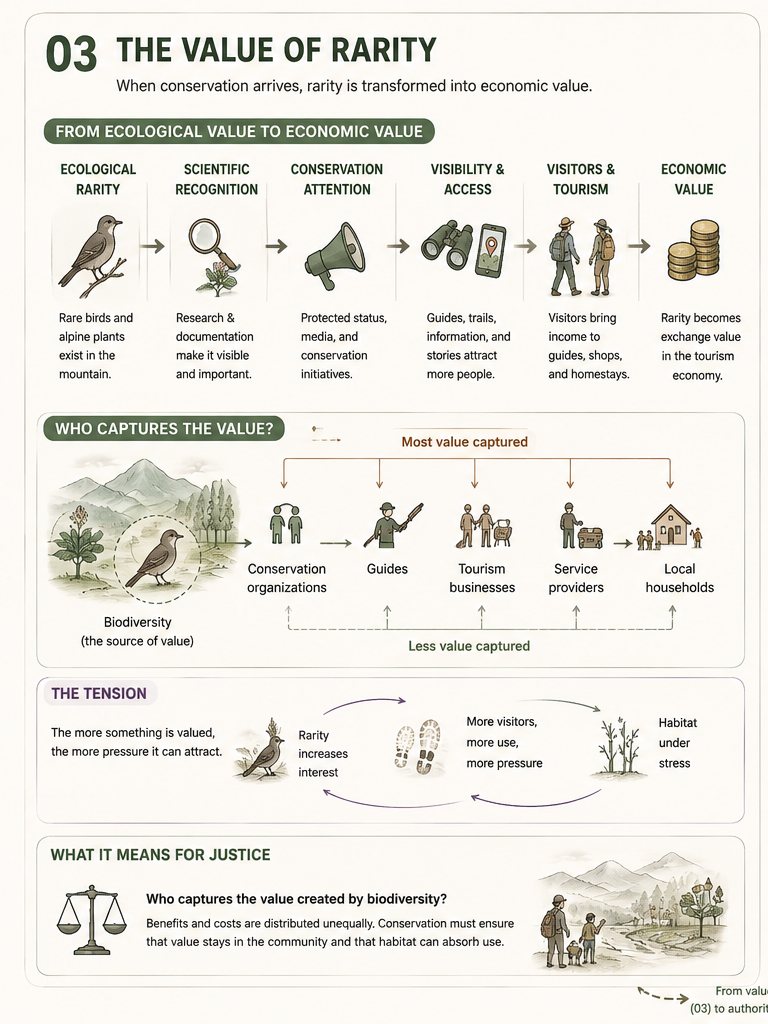
Map 03 — The Value of Rarity
Map 03 — Value

THE VALUE OF RARITY

Ecological rarity becomes scientific recognition, conservation attention, visibility and access, then tourism and economic value. Rarity increases interest — while habitat stays under stress.

What it means for justice — who captures the value created by biodiversity?

Map 04 — Who Knows the Mountain
Map 04 — Knowledge

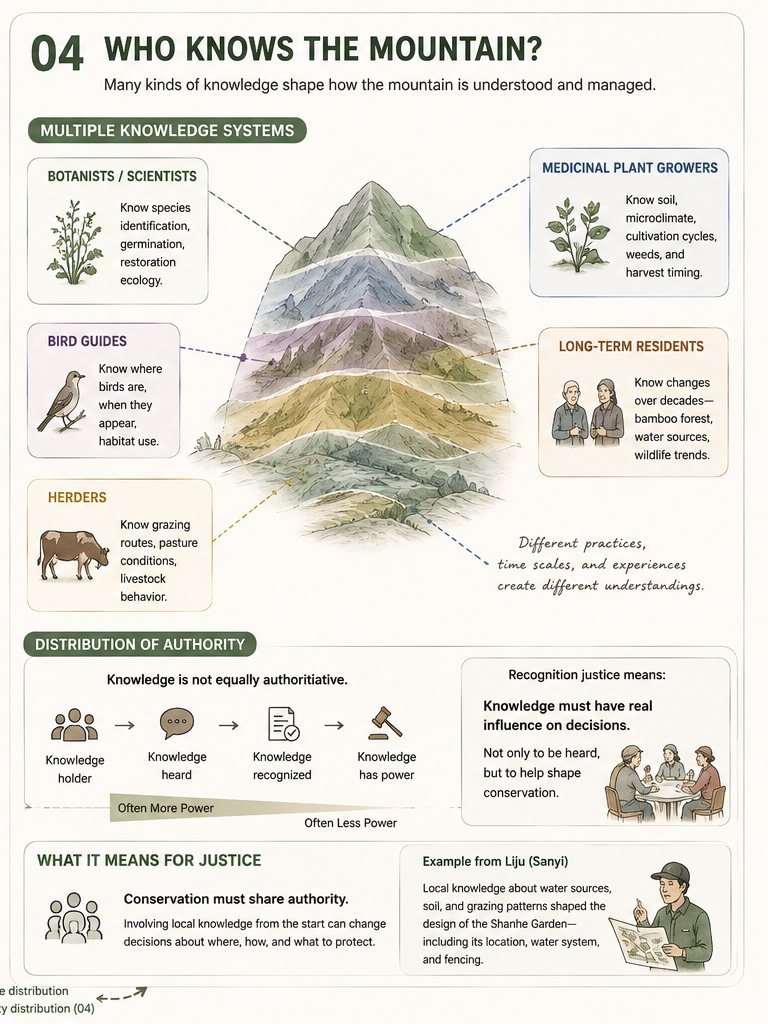
WHO KNOWS THE MOUNTAIN?

Botanists and scientists, bird guides, herders, medicinal-plant growers, and long-term residents notice different things. Authority runs from knowledge holder to heard, recognized, and powerful.

What it means for justice — conservation must share authority.

Map 05 — Who Can Afford to Care
Map 05 — Labor & time

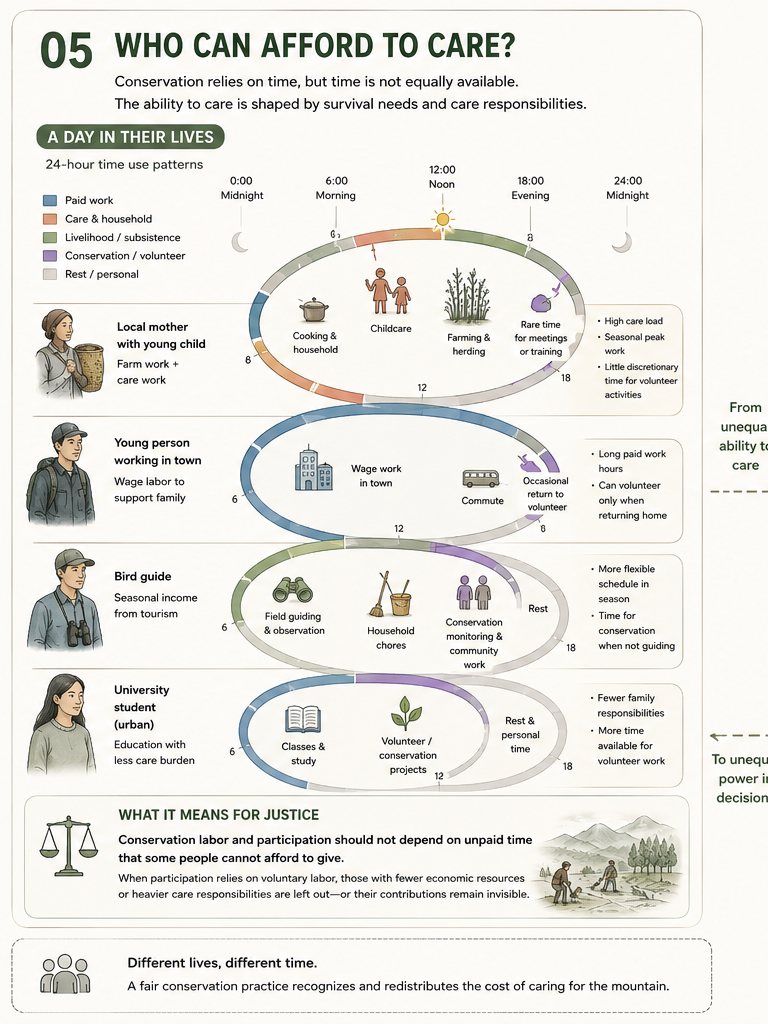
WHO CAN AFFORD TO CARE?

A day in the lives of a local mother with a young child, a young person working in town, a bird guide, and an urban university student — showing very different amounts of free time.

What it means for justice — conservation labor should not depend on unpaid time that some people cannot afford to give.

Map 06 — Who Decides the Future
Map 06 — Power

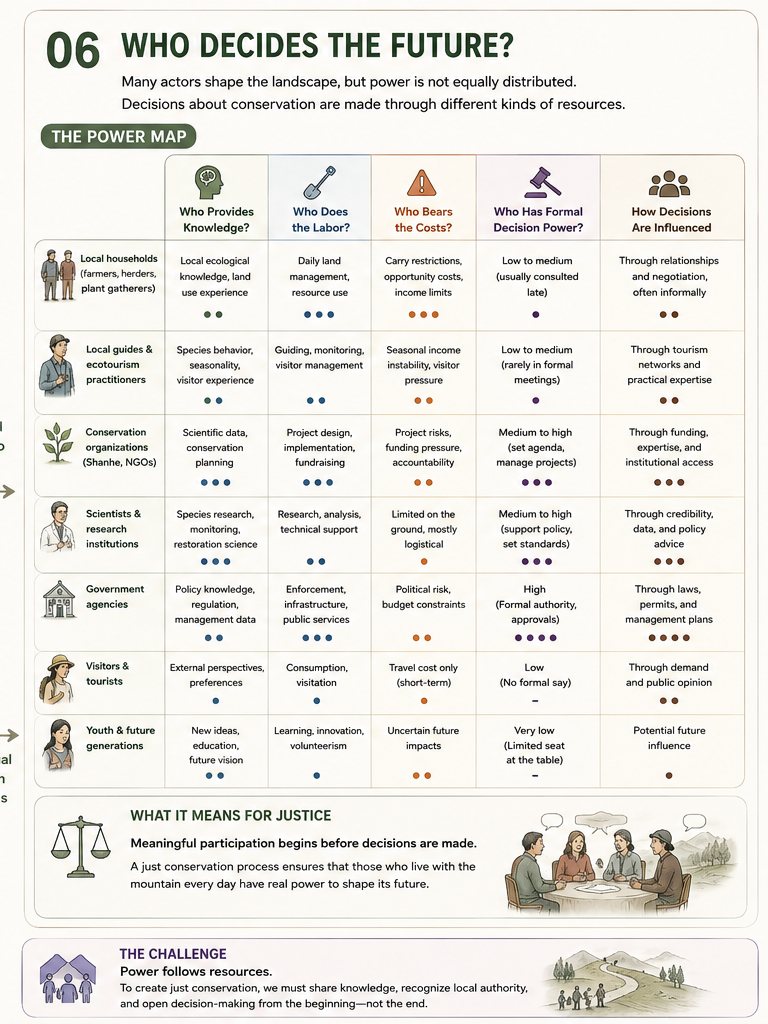
WHO DECIDES THE FUTURE?

A power map of who provides knowledge, who does the labor, who bears the costs, who holds formal decision power, and how decisions are influenced across seven groups of actors.

What it means for justice — meaningful participation begins before decisions are made.

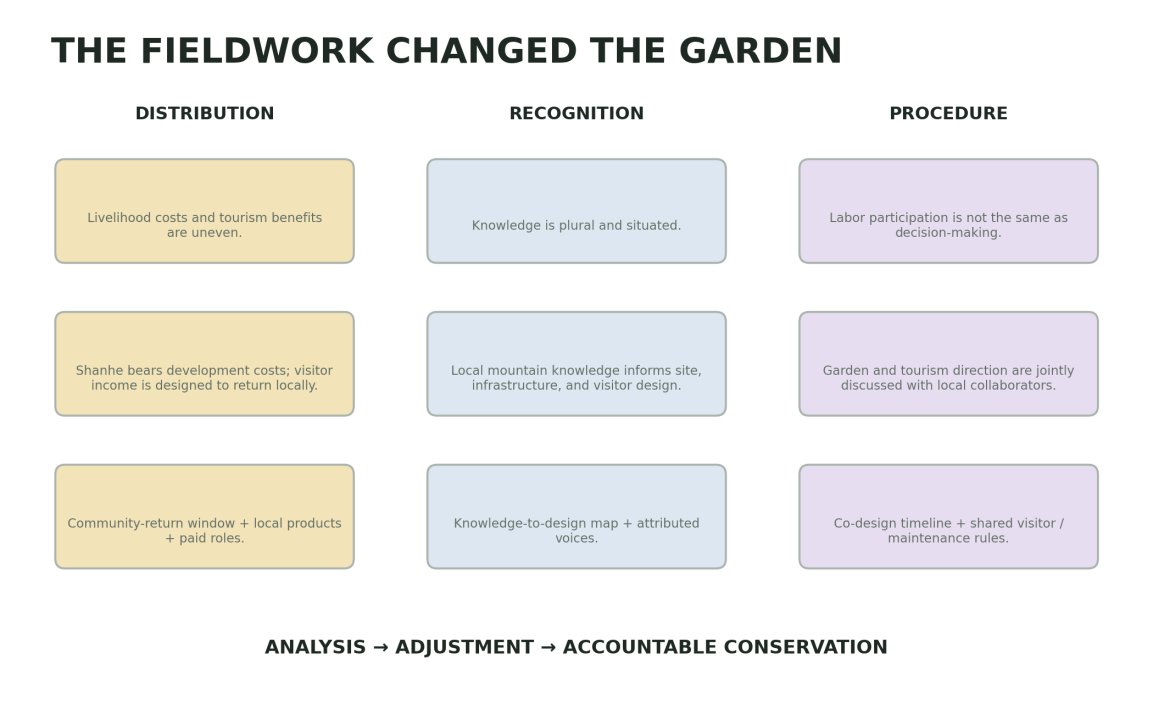
The fieldwork changed the garden — matrix
Analysis → adjustment → accountable conservationFig. A
A synthesis

THE FIELDWORK CHANGED THE GARDEN

Across the six maps, different stories reveal the same underlying pattern: livelihood insecurity, markets, labor, migration, tourism, conservation, and ecological change produce environmental pressure together. Explaining why those pressures emerge raises another question — when conservation responds, how are its consequences distributed?

The matrix above turns that analysis into adjustments: Shanhe bears development costs while visitor income is designed to return locally; local mountain knowledge informs site, infrastructure, and visitor design; and garden and tourism direction are jointly discussed with local collaborators.

DistributionRecognitionProcedureAccountability
Back to fieldwork overview